
Acquainted with the Night
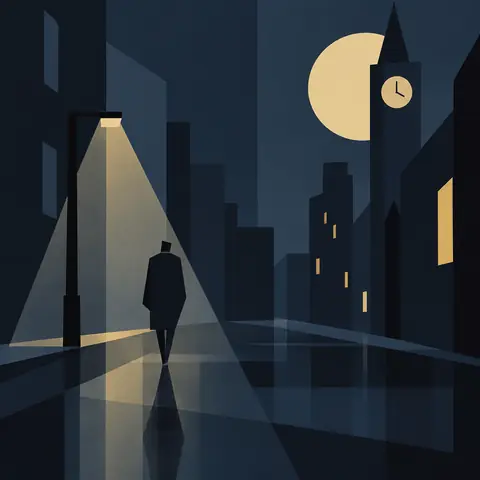
I have been one acquainted with the night. I have walked out in rain – and back in rain. I have outwalked the furthest city light. I have looked down the saddest city lane. I have passed by the watchman on his beat And dropped my eyes, unwilling to explain. I have stood still and stopped the sound of feet When far away an interrupted cry Came over houses from another street, But not to call me back or say good-bye; And further still at an unearthly height, One luminary clock against the sky Proclaimed the time was neither wrong nor right. I have been one acquainted with the night.
Acquainted with the Night - form Summary
Terza-rima Sonnet Shape
Frost frames a solitary speaker’s nocturnal walk as a tightly controlled sonnet. The poem uses three interlinked tercets and a closing couplet—echoing terza rima’s chain-like progression—while the first line returns as a refrain to bookend the experience. The compact form compresses movement and emotional restraint, so the spare images of rain, a watchman, distant cries, and a solitary clock feel inevitable and contained. The sonnet’s economy and circular closure reinforce the poem’s themes of isolation, repeated experience, and quiet endurance rather than narrative resolution.
Read Complete Analyses
Feel free to be first to leave comment.